21st AESOP Young Academics Conference
Politecnico di Bari, Bari, Italy | March 2027
Explore Now

Planning territories by navigating in uncertainties

Crises, collective actions and decisions for transformative practices

The conference explores uncertainty as a constant feature of planning processes that we tackle and navigate, but also as an opportunity that opens space for experimentation and transformative practices, together with wickedness across multiple planning domains without limiting the agenda to a single sector.

By connecting planning theories, governance and policy analysis, and innovative approaches and methods, the conference aims to attract an interdisciplinary and international audience - including participants beyond Europe and from non-member institutions - while offering a coherent scientific focus on how planning can cope with uncertainties in the double perspective mentioned above.

The programme will combine track-related keynote lectures, parallel sessions, a plenary debate, three thematic hands-on workshops and a concluding joint workshop designed to synthesize key insights, methodological lessons, and future agendas for research and planning practice in uncertainties.

Tracks

The Conference is structured around four tracks developed through parallel paper sessions, complemented by two keynote lectures (opening and synthesis) and a plenary debate that provides a shared conceptual anchor across the event. Interactive learning is strengthened through three thematic hands-on workshops and a concluding joint workshop, where insights are brought together through rapporteur snapshots and mixed-group synthesis.

Track 1 | Risks and adaptations: planning scenarios
Planning increasingly takes place in contexts characterized by crises, risks, shocks and long-term stressors, where knowledge is partial, evidence contested, and consequences uneven across places and groups. This track explores how planners and communities use scenarios to navigate in uncertainties, compare alternatives, and design responses that remain legitimate and workable over time.

We welcome conceptual, empirical and methodological contributions across risk-related planning domains, including work that critically reflects on how risk is framed, communicated and governed in planning and policy processes.

Guiding questions:
• How are possible futures framed in your case, and which assumptions or forms of evidence shape planning priorities and choices?
• Whose knowledge is recognized in risk-related decisions, and which risks are prioritized or deferred across scales and institutions?
• How can scenarios practices support learning and action in conditions of uncertainty while remaining transparent and socially legitimate?

Thematic hands-on Workshop: “Scenarios for risk and adaptation: mapping uncertainties, pathways and trade-offs”
Track 2 | Transitions or transformations? Facing and activating change
Transitions are rarely linear. They unfold through contested visions, shifting coalitions, institutional frictions, and uneven capacities to implement change. This track addresses uncertainty as a defining feature of change processes: how planning navigates multiple possible pathways over time, and how choices made “along the way” shape what becomes feasible, legitimate and implementable.

We welcome contributions that analyze how transition pathways are framed and steered in real planning and policy settings - how priorities are set, how coordination across actors and scales is achieved (or fails), and how trade-offs and conflicts are negotiated. A central focus is the boundary between transitions and transformations: when incremental adjustments accumulate into deeper institutional and socio-spatial change, and what this means for legitimacy, justice and implementation capacity across different domains (e.g., energy, mobility, circular strategies, digitalization, public services).

Guiding questions:
• What makes a process “a transition” in your case, and what conditions or ruptures might turn it into transformation?
• How are pathways framed and contested over time, and which knowledges, priorities and actors become dominant in steering them?
• How can planning act within change processes while negotiating trade-offs, institutional constraints and implementation capacity?

Thematic hands-on Workshop: “Transitions vs transformations: mapping pathways, constraints and leverage points”
Track 3 | Everyday uncertainty: creating and negotiating places of change
This track focuses on uncertainty as it is experienced in everyday life: rising costs, insecure living conditions, unequal access to services and opportunities, and the cumulative effects of planning and policy choices. It invites contributions that examine how everyday uncertainty is produced and negotiated through markets, regulation and local decision-making, and how this shapes trust, legitimacy and the capacity to act.

We welcome contributions on affordability and access in a broad sense, as well as on vulnerability, exclusion and the uneven distribution of burdens and benefits. Contributions are encouraged to analyze who bears the costs of uncertainty, which experiences and forms of knowledge are recognized in decision-making, and what tends to be prioritized, normalized or deferred in practice.

Guiding questions:
• Where does everyday uncertainty emerge in your case, and whose experiences are most visible – or overlooked – in planning processes?
• How do markets, rules and local decisions shape affordability and access across domains?
• What responses are considered feasible and legitimate, and who benefits – or remains exposed – when uncertainty persists?

Thematic hands-on Workshop: “Everyday uncertainty: mapping pressures, exposures and workable responses”
Track 4 | Uncertainty in model-mediated and data-intensive planning environments
This track will offer an integrative perspective that reflects on how uncertainty is governed across scales and domains, including the interaction between institutional arrangements and modelling practices in contemporary planning. It will also address the tensions between institutional governance and model-mediated reasoning in contemporary planning practice. Everyday uncertainty is also increasingly shaped by digital infrastructures and algorithmic systems that mediate access to housing, mobility, services, and public resources. Particular attention will be paid to the role of modelling practices, agent-based approaches, formal knowledge structures, and emerging AI-based tools in structuring planning knowledge and influencing decision processes The track therefore encourages reflections on how such tools influence visibility, prioritization and legitimacy in everyday planning practices.

Guiding questions:
• In what ways is uncertainty embedded in agent-based models of institutional and political decision-making processes?
• How do digital and AI-blended systems influence everyday planning practices and their implications for equity and legitimacy?
• How do models contribute not only to describing but also to framing possible futures?
• What are the implications of using formal ontologies and AI-based tools in supporting planning practices concerning environmental crisis?

Thematic hands-on Workshop: “Model-mediated planning in uncertainties: mapping evidence, priorities and legitimacy”

Conference venue

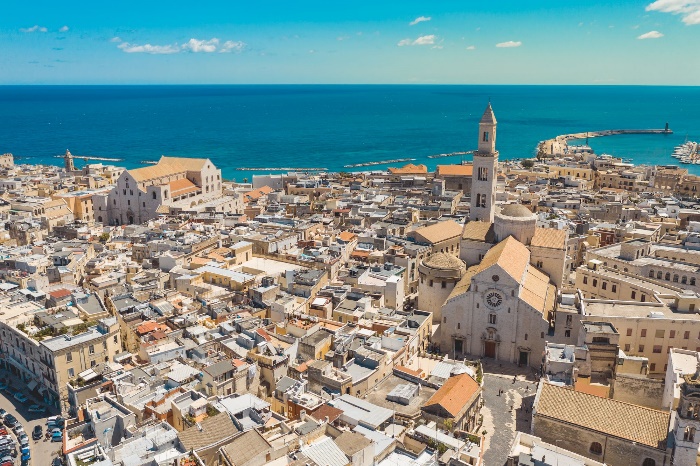
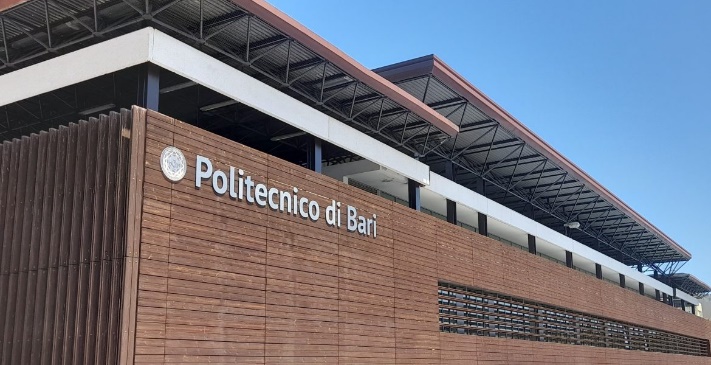
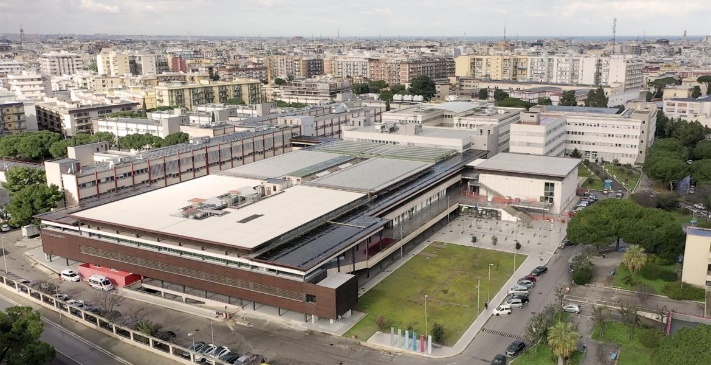
The conference will be hosted entirely at the Polytechnic University of Bari – Department of Civil, Environmental, Land, Building Engineering and Chemistry (DICATECh), providing a compact, walkable and easy-to-navigate setting for all conference activities. Holding the event in a single venue supports smooth transitions between plenary moments, parallel sessions, workshops and informal networking, while reducing logistical complexity for participants. The campus location is also highly accessible, being well connected to Bari’s main railway station and reachable on foot or by public transport (bus) from the city center, facilitating arrivals and daily mobility for both Italian and international attendees.

Bari offers an attractive setting for Young Academics, combining a vibrant historic center, a lively waterfront and a strong cultural scene within a walkable urban environment. As a compact and welcoming city, it provides a pleasant and affordable conference experience, with opportunities for informal networking in public spaces, cafés and along the seafront.
LOC Organizers

/Gloria%20Toma
University of Bari Aldo Moro / Politecnico di Bari
Gloria Toma
PhD candidate in the Sustainable Land Management inter-university program jointly coordinated by the University of Bari Aldo Moro and the Polytechnic University of Bari. Her research encompasses issues pertaining to urban and territorial regeneration and mobility, with a particular focus on slow mobility infrastructures such as walking and cycling paths. The core focus of her work is the influence of different speeds of movement on the relationship between infrastructure and landscape.
/Shahd%20Ahmad%20Khan
University of Bari Aldo Moro / Politecnico di Bari
Shahd Ahmad Khan
PhD candidate in the Sustainable Land Management inter-university program jointly coordinated by the University of Bari Aldo Moro and the Polytechnic University of Bari. His doctoral research is titled “Urban Regeneration through Energy Transition in Disadvantaged Neighborhoods”.
/Serena%20Barnaba
University of Bari Aldo Moro / Politecnico di Bari
Serena Barnaba
PhD candidate in the Sustainable Land Management inter-university program jointly coordinated by the University of Bari Aldo Moro and the Polytechnic University of Bari. She is currently researching tailored strategies for just ecological and energy transitions in disadvantaged neighbourhoods. The work examines how traditional and AI-based tools can map urban vulnerabilities while emphasizing the central role of citizens. The aim is to promote a participatory and intersectional framework for more equitable and inclusive urban planning.

LOC Conference Coordinators

/Giulia%20Motta%20Zanin
Politecnico di Bari
Giulia Motta Zanin
Assistant professor in Urban Planning and Planning Techniques. Ph.D. in Risk and Environmental, Territorial and Building Development at the Polytechnic University of Bari. Her main research interests include strategic and territorial planning, participatory processes, urban and territorial regeneration, energy transition and social justice, and environmental risk management, with a particular focus on risk perception.
/Dario%20Esposito
Politecnico di Bari
Dario Esposito
Research fellow at the Polytechnic University of Bari. His research focuses on urban science, spatial analysis and modeling, decision support systems, and disaster risk reduction. He develops participatory and computational approaches to foster resilient and sustainable development of places and infrastructure, emphasizing human factors, spatial cognition, and local knowledge. He is vice-chair of Technical Commission 465 Sustainable Cities and Communities of the European Committee for Standardization.

LOC - Scientific Committee

Politecnico di Bari
Pasquale Balena
PhD, responsible for the Spatial and Territorial Cognition Laboratory
Politecnico di Bari
Angela Barbanente
Full professor
Politecnico di Bari
Alessandro Bonifazi
Post-doc researcher
Politecnico di Bari
Dino Borri
Professor emeritus
Politecnico di Bari
Domenico Camarda
Full professor
Politecnico di Bari
Dario Esposito
Post-doc researcher
Politecnico di Bari
Laura Grassini
Associate professor
Politecnico di Bari
Valeria Monno
Full professor and COREP Me
Politecnico di Bari
Giulia Motta Zanin
Assistant professor